MICA PGCM-ADVERTISING AND MARKETING COMMUNICATION
MICA’s Post Graduate Certificate in Management (PGCM) in Advertising and Marketing Communication is an AICTE-approved, one-year, full-time residential programme for people who want to “make the work”, not just talk about it. It is designed for aspiring copywriters, art directors and creative thinkers headed for the advertising industry.
The programme moves from strategic foundation and creative ideation through creative craft, presentation and industry immersion to industry alignment. It is judged the way the industry judges creative work: by jury, with your work on the wall.
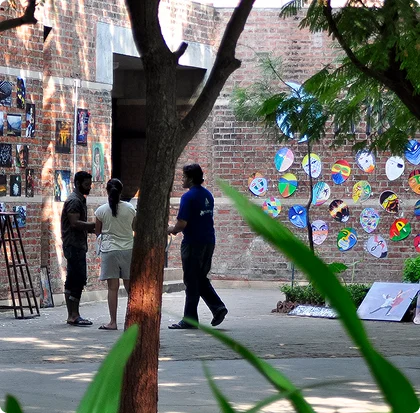
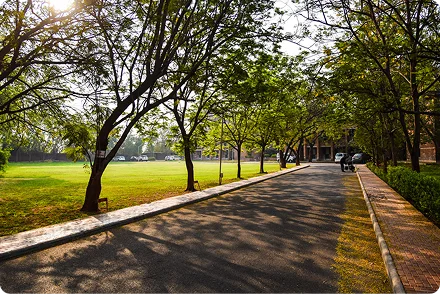
Set on MICA’s 19-acre residential campus in Shela, Ahmedabad, PGCM-AMC sits under MICA’s School of Applied Creativity.
On this page
What is MICA PGCM-AMC?
MICA has three objectives for its PGCM-AMC graduates
• To integrate creativity, technology and consumer experience into communication decisions.
• To drive innovation across creative products and platforms in emerging media industries.
The PGCM-AMC Course design and Curriculum
Four Terms. One Year. 48 Credits.
Term One
Learning to think before you make.
Students learn to understand the brand and its context, identify insights, frame marketing and communication problems, and translate them into Creative Strategies.
They then learn to make the crucial leap from Creative Strategy to Big Idea. They learn how ideas are generated, articulated and evaluated.
This is where strategic thinking meets creative ideation, giving the work a strong foundation before students begin mastering its craft.
Term Two
The making term, and the heart of the programme.
Copywriting and art direction are taught in parallel through progressive modules, developing the two core creative disciplines of advertising side by side.
Students learn to turn ideas into compelling work across formats and media, building the craft, judgement and technical skills required to make communication distinctive, persuasive and effective.
Term Three
Making the work. Selling the work. Experiencing the industry.
Students learn how to articulate, present and sell creative ideas with clarity and conviction. They develop their ability to explain the thinking behind the work, demonstrate the creative solution and persuade an audience of its value.
Creative thinking and craft come together in film, integrated campaigns and other forms of finished work, with AI integrated into the creative process.
The term also brings students closer to industry practice through interaction with working professionals and an international immersion.
Term Four
Taking the learning into the real world.
Students apply their creative and strategic capabilities in an industry environment, bringing together what they have learned across the year with the demands of professional practice.
The term is about moving from being a student of creative communication to being ready to contribute as a creative professional.
The Creative Communications Process
Strategic Foundation
Understand the problem. Find the insight. Build the Creative Strategy.
Creative Ideation
Turn the Creative Strategy into the Big Idea.
Creative Craft
Turn the Big Idea into compelling work.
Presentation & Industry Immersion
Articulate, present and defend the work. Experience how the industry works.
Industry Alignment
What You'll Actually Learn
The curriculum spans the full creative communications process, including
• Creative ideation and Big Idea development
• Creative brief development
• Copywriting across print, outdoor, television, social media, reels, viral videos and YouTube
• Art direction
• Integrated digital campaigns
• Influencer campaigns
• Ad film production, from treatment notes through to shooting
• Film scripting and storytelling
• Presentation and persuasive articulation
• Creative software skills
• AI-assisted creative development
• Portfolio development and jury presentation
Creativity With AI, Not Against It
AI is integrated into the curriculum rather than bolted on.
Who Is the Programme For?
Career Outcomes
Graduates move into roles including:
Craft Roles
• Copywriter
• Designer
• Content Creator
• Conceptualizer
• Copy Supervisor
• Art Director
• Creative Strategist
• Social Media Artisan
• Creative Associate
• Content Associate
• Brand & Content Architect
• Account Manager
Sectors
• Digital and creative agencies
• Brand and marketing teams
• Content and production studios
• Social media and influencer marketing
• Media and entertainment
• Consumer brands
• Digital platforms and technology-led businesses
• Independent and entrepreneurial creative ventures
Placement Statistics
Final Placement
• Highest Package: ₹16 LPA
• Average Package: ₹8.7 LPA
• Median Package: ₹8 LPA
Prominent Recruiters
1. Offbeat Studio
2. Zepto
3. Renee Cosmetics
4. Goodvibes Entertainment
5. The New Thing
6. CAB Services
7. Havas Media
8. Blinkit
9. FCB Kinnect
10. Leo Burnett
11. Simba Beer
12. MSL Publicis Groupe
13. Business Standard
14. DO agency
15. Studio Blo
16. Vaani Studios
17. SuperYou
18. TCY Online
Learn From the Best

Internship
Recruiters for Internship
• Talented
• TNT
• RedBus
• Wondrlab
• Goodvibes
• Itch
• Asymmetry
• Team Flash Studios
• Cab experiences
• Transformative Ventures
• Restless
• SailThru Ventures
• BBDO
• The cutting crew
• Saatchi Propagate
• The Script Room
• BBH
• Enormous
• Saatchi & Saatchi
• Tonic Worldwide
• Creative Land Asia
• Thought Blurb
• Please see
• ECultify
• OML (Only Much Louder)
Roles offered during Internship
Content Creator
Creative Producer
Creative Copywriter
Conceptualizer & Visualiser
2D Designer
Marketing Strategist
Creative Strategist
Social Media Generalist
Art Director
Brand Strategist
Influencer Marketing Specialist
Stipend Offered:
Highest Stipend – 30,000
Average Stipend – 20,468
Stipend Offered (1 month)
Highest Stipend – INR 30,000 per month
Average Stipend – INR 20,468 per Month
The PGCM-AMC Advantage
01. Craft + Strategy
A full year of creative craft, strategy and industry practice in one intensive programme.
02. Portfolio + Jury
Jury-assessed, portfolio-led learning that mirrors how the industry evaluates creative work.
03. Global + Industry Exposure
International immersion and industry experience built into the year.
04. The MICAn Network
Access to MICA’s wider alumni network of more than 5,000 MICAns worldwide.
Campus
Alumni and Industry Network
Prominent MICAns working in the creative industry include:
• Ashutosh Sawhney – President DDB Tribal, DDB Mudra Group
• Tejasvi Gulati – Creative Director, Blinkit
• Kshitij Singh – Manager Creatives, Snabbit
• Tithi Ghosh – President, Ogilvy South
• P.G. Aditiya – Co-founder Chief Creative Officer, Talented
• Pooja Manek – Founding Member Creative, Talented
• Binaifer Dulani – Founding Member Creative, Talented
• Nidhi Netravalkar – Associate Creative Director, FCB Kinnect
• Utkarsh Ujjwal – Director, Creative Communications, Jio Hotstar
• Namrata Mohindra – Creative, The Script Room
• Ajit Gurnani – Chief Business Development Officer, Publicis Groupe


What MICA'S Graduates Do Now

Pranay Jain
Junior Copywriter, Leo Burnett Mumbai
Bhadra Bal
Copy Supervisor, FCB Kinnect
Frequently Asked Questions
What is MICA PGCM (Advertising and Marketing Communication)?
It trains students in copywriting, art direction, creative strategy and campaign production, assessed through portfolio juries.
What is the difference between PGCM-AMC and PGCM-DMMC?
PGCM-AMC is built for advertising and brand creative craft, including copywriting, art direction and integrated campaigns.
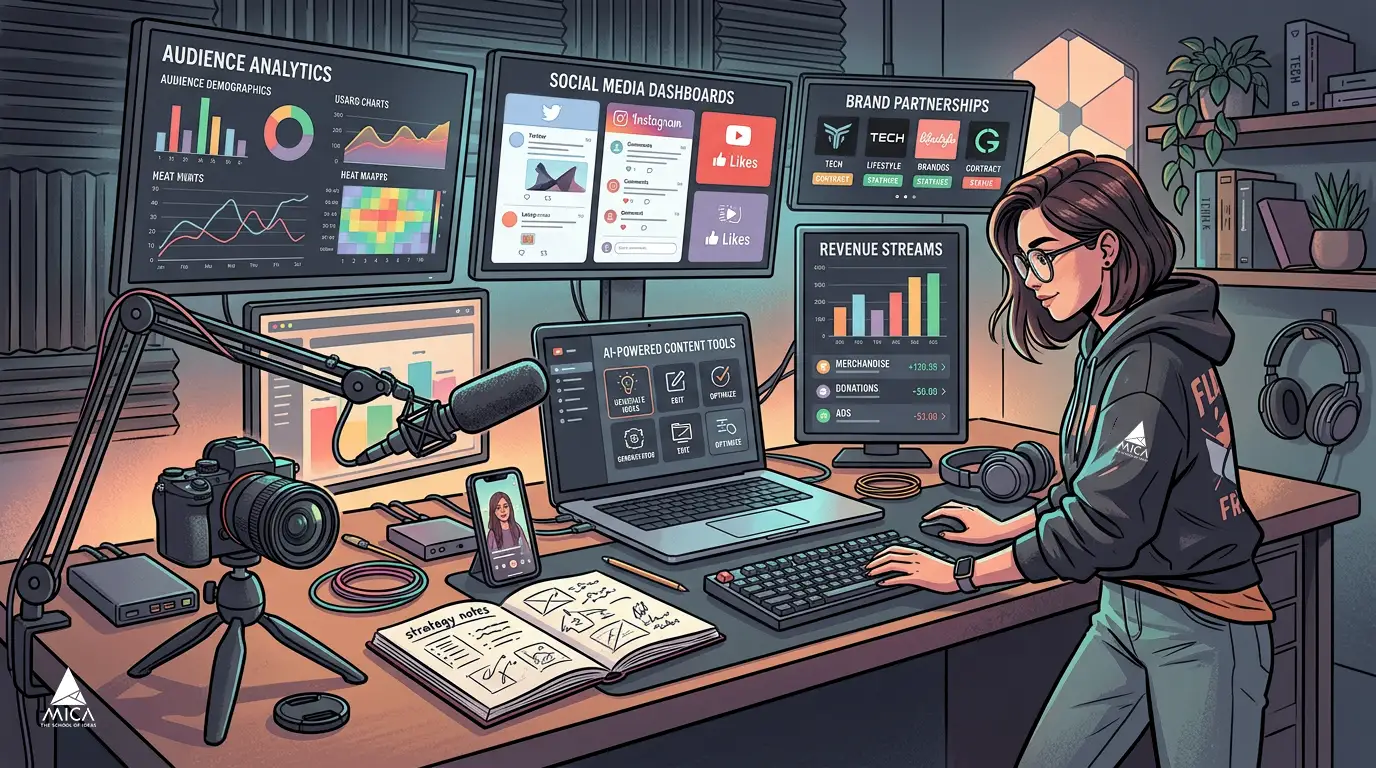
PGCM-DMMC is built for the creator economy, including social media marketing, content creation, talent management and monetisation.
How long is the PGCM-AMC programme, and how is it structured?
Strategic Foundation and Creative Ideation → Mastering the Creative Craft → Presentation Skills and Industry Immersion → Industry Alignment.
The programme culminates in professional industry experience and the completion of the learning journey.
Was PGCM-AMC previously known as CCC?
Is MICA PGCM-AMC a degree or a diploma?
Who is PGCM-AMC designed for?
What roles do PGCM-AMC graduates move into?
How is creative technology integrated into PGCM-AMC?
Is there an international component in PGCM-AMC?
What is the total fee for PGCM-AMC?
The fees of the one-year programme in 2026-27 was INR 13.3 lakh, inclusive of tuition, residential charges, internet and computing, library and database access, and medical facilities and Insurance.
What scholarships are available?
Awards range from 25% to 100% of tuition fees, with family income as the principal criterion alongside academic and other achievements.
Shortlisted applicants are interviewed by the MICA Scholarships Committee.
Does PGCM-AMC require MICAT?
Yes. Candidates need to appear for MICAT to be eligible to secure admissions for PGCM-AMC MICAT is MICA’s own entrance exam, conducted twice a year – (typically in December and February). The better score from two MICAT attempts is considered.
Does PGCM – AMC require submitting CAT/XAT/GMAT score?
No, in order to secure admission to PGCM-AMC programme CAT/XAT/GMAT score is not required.
Is a creative background mandatory for PGCM-AMC?
No.
PGCM-AMC welcomes graduates from all academic disciplines.
What the programme looks for is creative thinking, communication ability and genuine
motivation to build a career in creative communications, not a specific undergraduate
degree.
Is the programme residential?
Students live on campus throughout the year except during declared term-end breaks, internships and immersions.
MICA PGCM-AMC IN CONTEXT
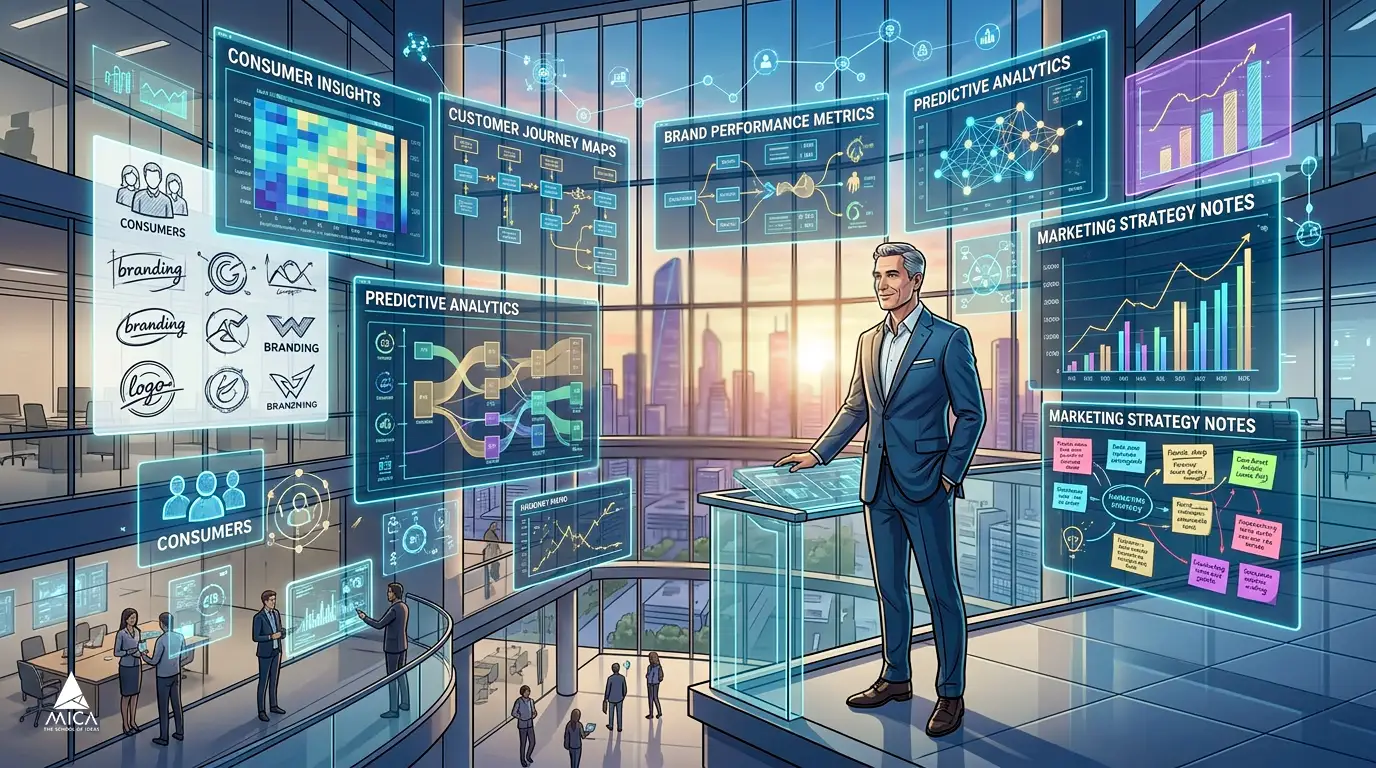
MICA PGCM-AMC is not a traditional management or design programme.
It occupies a deliberately distinct space, one that integrates creative craft, strategy and emerging technology in a single curriculum rather than treating them as separate disciplines.
For aspirants choosing between PGCM-AMC and other routes, the distinction is clear.
A traditional management programme such as an MBA or PGDM teaches business and marketing strategy, but typically does not develop deep creative craft.
A pure design programme builds visual and product design skills, but rarely engages with creative strategy or campaign thinking at the same depth.
A mass communication programme covers media and journalism, but is not focused specifically on the advertising and brand creative industry.
PGCM-AMC is built for the seam between these, for people who want to make work, not just analyse it,and who want to think about that work strategically rather than simply execute briefs.
For those drawn more to management-led marketing or brand careers, MICA PGDM-C is the more aligned route.