Let’s start with something we all know. Back in the day, whenever I cracked a quick joke, pulled off a silly pun, or just threw a completely wild perspective into a conversation, people would look at me and say, “Man, you’re creative”.
It’s funny, isn’t it? When we were kids, we invented entirely new games out of thin air. We’d take a bottle of soda and try to turn it into a backyard rocket. Back then, nobody called it creativity. Our parents just called it “timepass”.
That’s the beautiful irony of creativity in Bharat, it’s absolutely everywhere. Look at a roadside vendor; every single festival brings a brand-new product line and a clever marketing scheme. No market research, no focus group discussions, and zero corporate board approvals. Look at the Mumbai dabbawalas, running a flawless, Six Sigma Black Belt level operation every single day.
Then, Standard 10 hits.
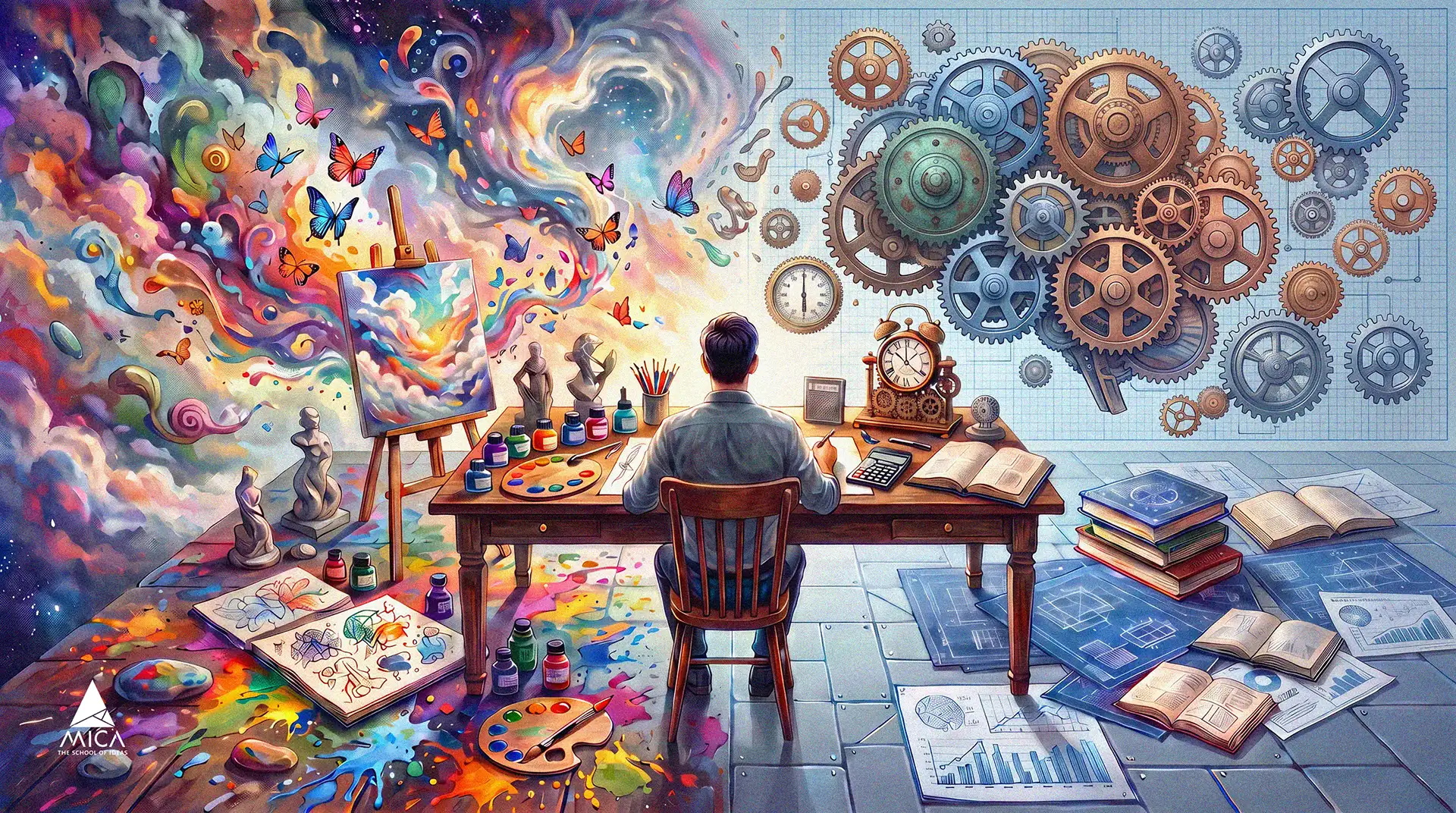
Suddenly, having an imagination is treated like a distraction. The kid asking the weird, uncomfortable questions gets labeled “difficult”. The one memorizing the guidebooks word-for-word becomes “promising”. Somewhere along the way, we did something really remarkable as a society, we completely confused memory with intelligence.
But creativity doesn’t just die. It just goes underground.
So, what are we actually talking about here?
It’s not just about painting a canvas or writing poetry. It’s definitely not about wearing round glasses and looking emotionally unavailable at a hipster café. True creativity is simply the ability to connect dots that other people don’t even notice.
Think about it. Tenali Rama always solved problems sideways. The Panchatantra was teaching masterclasses in political strategy through animal fables long before corporate storytelling became a fancy buzzword. R.K. Laxman quietly captured the soul of an entire nation through the eyes of one silent Common Man. None of these people created something out of absolute nothingness. They just combined existing things differently.
Ancient Bharat understood this beautifully. Our traditions never looked at creativity as some sort of elusive magic, they treated it as a discipline.
Take the Sanskrit concept of Pratibha, or creative intelligence. It wasn’t just reserved for poets and artists. It was understood as a mental muscle that you sharpen through living, keen observation, and conscious practice.
The framework they used was astonishingly modern –
Sahaja – The raw creative spark you are born with.
Aharya – The inspiration and knowledge you actively absorb from the world around you.
Aupadesika – The craft you refine through rigorous training and mentorship.
Think about how advanced that is. Nearly two thousand years ago, this land had already accepted that creativity isn’t just a random talent you either have or don’t. It’s a cultivation.
Kalidasa didn’t just wake up one morning and accidentally write a masterpiece. He studied Kavya and mastered Alankara Shastra. Bharata Muni’s Natya Shastra is practically the world’s oldest masterclass on storytelling, human emotion, and audience psychology. Today’s world calls it “design thinking,” but ancient Bharat simply called it understanding human rasa.
Even Rabindranath Tagore rebelled against the rigid structure of classic classrooms. He built Santiniketan under the open skies because he knew creativity suffocates inside over-disciplined, sterile walls. And honestly, he was spot on.
Creativity rarely shows up in neat, quiet, perfect conditions. It thrives in chaos.
Think of street cricket, where the rules get completely rewritten every evening depending on whose scooter is parked near the wickets. Indian families mastered the art of “adjust kar lenge” generations before tech startups started bragging about “agile thinking”. Some of our greatest, most iconic cinema came out of severe budget limitations, not abundance.
Constraint forces invention.
I’ve seen this happen firsthand in advertising rooms. The first draft is almost always predictable, safe, and well-behaved. But then, someone throws in an unexpected question.
“What if this insurance brand spoke like an old grandmother?”
“What if this campaign sounded less like a corporation and more like a high-energy cricket commentary?”
That tiny shift changes the whole game. Creativity usually hides inside those uncomfortable, strange combinations. India didn’t invent creativity despite the chaos around us. We invented it because of it.
The real tragedy isn’t that people lack creativity. It’s that somewhere between report cards, hyper-competitive coaching classes, and the dreaded “log kya kahenge,” a lot of people just stopped believing they ever had it.
Look, not everyone needs to become a Satyajit Ray or a Gulzar. But every single one of us can become a little more creatively alive.
Because at the end of the day, maybe that’s the real purpose of creativity. It’s not about chasing fame, proving you’re a genius, or hitting an innovation metric. It’s just about having the ability to see the exact same world a little bit differently, right before everybody else does.
Related Courses: The School of Applied Creativity – Where Imagination Meets Innovation