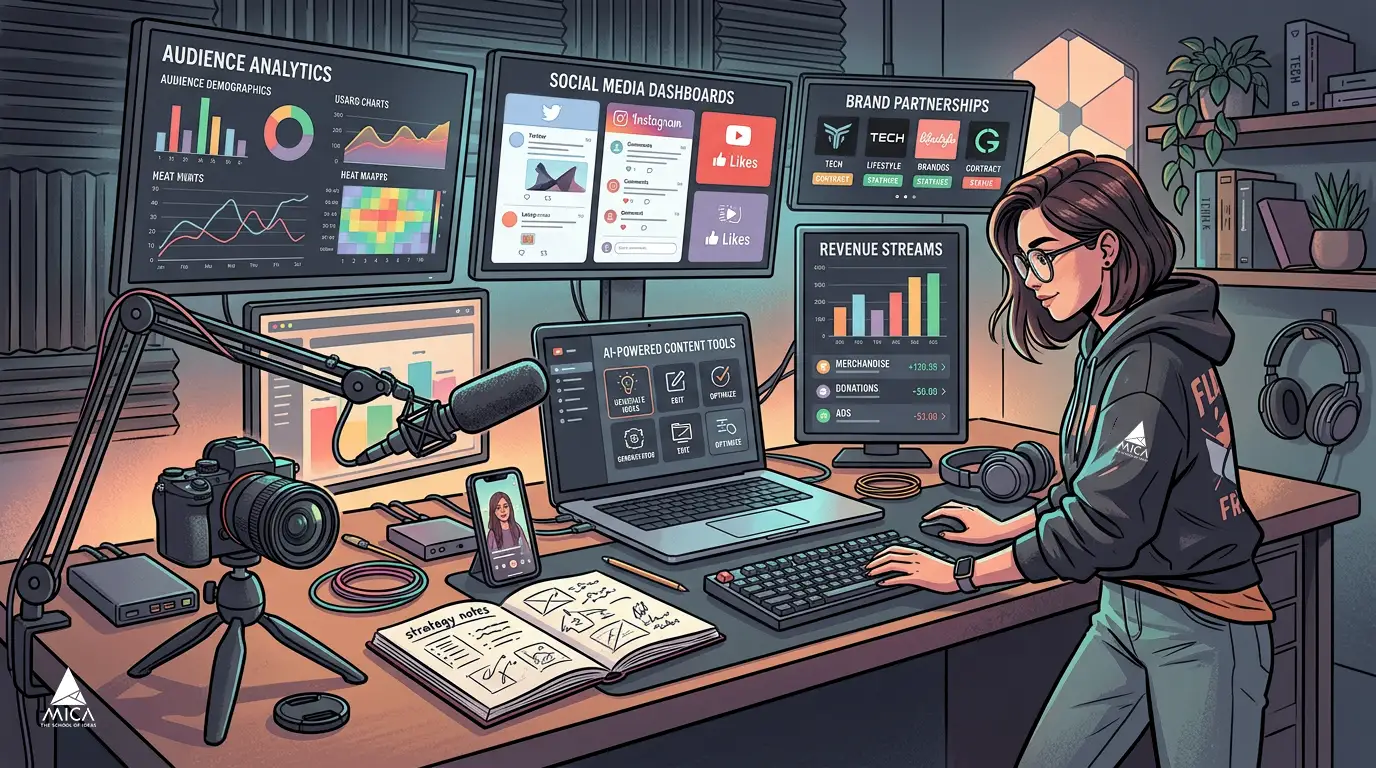
That’s the core idea behind MICA’s new Content and Creator Economy (CCE) curriculum: creators today aren’t just content producers. They’re brand builders, community architects, and small business owners who happen to work in front of a camera.
Missing Skill Isn't Creativity — It's Strategy
Most people assume creators just need to be creative. But talk to anyone who’s built a sustainable presence, and you’ll hear a different story: creativity gets you noticed, strategy is what keeps you in business.
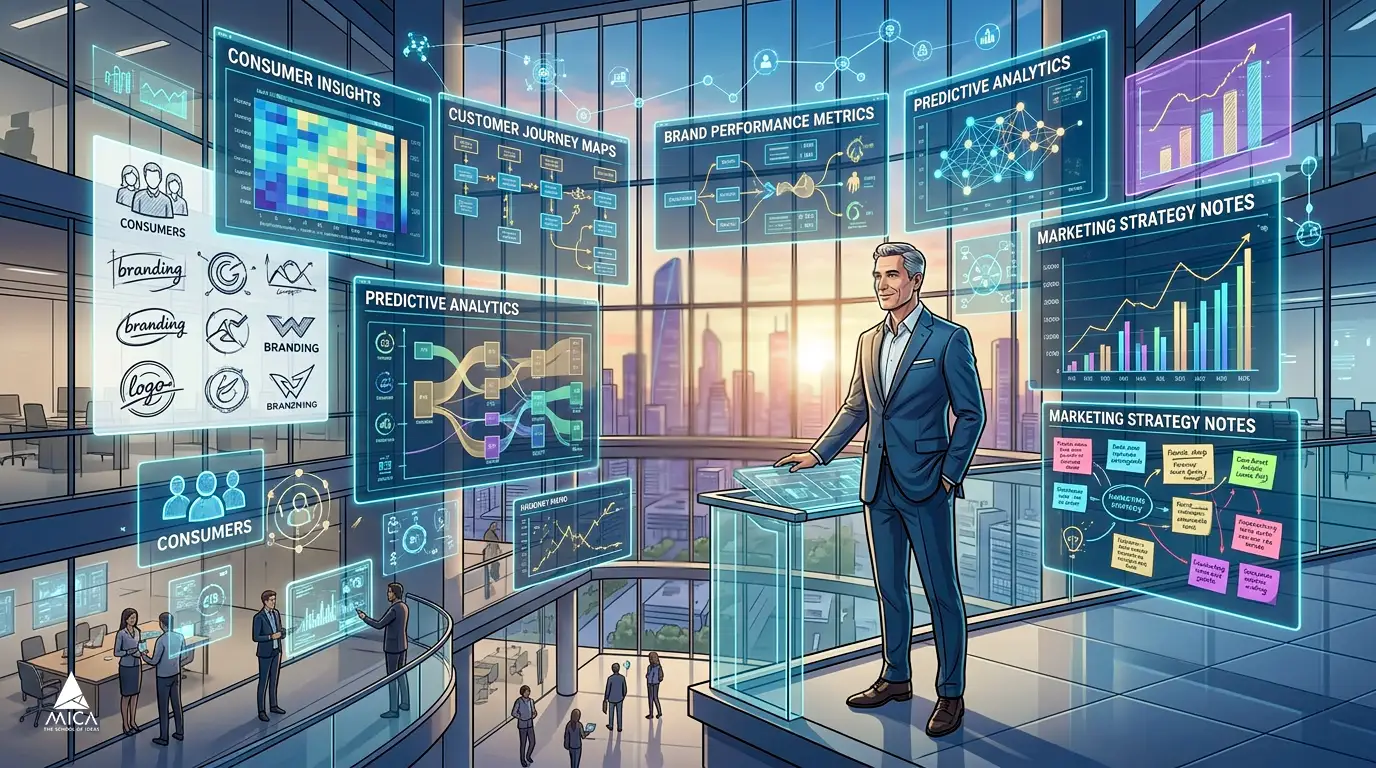
- They treat content like a real product, not just a post. The creators who stick around aren’t the ones chasing every trend. They pick a lane, get genuinely good at it, and pay attention to what their audience wants — instead of guessing. MICA’s PGCM-Digital Media and Marketing Communications (Earlier CCE) programme trains students to read platform algorithms and audience behavior the way a product manager reads user data, so content decisions come from insight, not gut feel.
- They understand the business side, not just the creative side. Plenty of people know how to make content. Far fewer understand how the money works — brand deals, IP rights, audience analytics, community monetization. Most working creators lean heavily on brand partnerships to earn a living, which means, whether they realize it or not, they’re already running a small business: negotiating rates, managing contracts, and growing a client base. MICA leans into this directly with courses on Digital Marketing & Creator Commerce, Media Economics, Project Management for Media, and IP Rights for Creators.
- They show up consistently, even when it’s not glamorous. This is the unsexy truth nobody puts in the highlight reel: algorithms reward consistency, brands reward consistency, and audiences reward consistency. The creators who make it aren’t waiting for inspiration — they’ve built routines and systems that keep the content flowing even on the days motivation doesn’t show up.
Why This Matters Even More Now
AI has made production almost frictionless. Anyone can generate visuals, write captions, edit videos, or automate a posting schedule in minutes. That’s genuinely useful — and it’s also erased the old advantage of “I can make things faster than you.”
So, where’s the edge now? Not in production speed, but in things AI can’t fake original thinking, a real point of view, authentic community, and a perspective only you have. MICA’s School of Applied Creativity calls this shift the move into the “Imagination Age” when information and tools are available to everyone, imagination becomes the actual competitive edge. The creators who win aren’t the ones who use AI the most; they’re the ones who pair it with real human insight.
From Side Hustle to Serious Profession
MICA recently launched India’s first dedicated Content and Creator Economy programme, built for students heading into content creation, influencer marketing, social strategy, and talent management. It’s a sign of something bigger: creating content is no longer a “side hustle” — it’s becoming a structured profession with its own skill set, just like advertising and marketing did decades ago.
That’s why today’s most successful creators aren’t just posting; they’re launching product lines, communities, membership platforms, courses, and full-fledged media brands around their work.
The Real Takeaway
Attention will always be abundant. Trust is what’s scarce, and it’s trust that turns the following into a business.
The creators who thrive over the next decade won’t just be the ones with the most views. They’ll be the ones who build real communities, own their IP, and run sustainable businesses around their ideas. The question isn’t whether you can create content anymore.
It’s whether you can build a creator business.
That’s the conversation MICA is here to lead.
Related Learning Opportunities:
The School of Applied Creativity
PGCM-Digital Media and Marketing Communications