
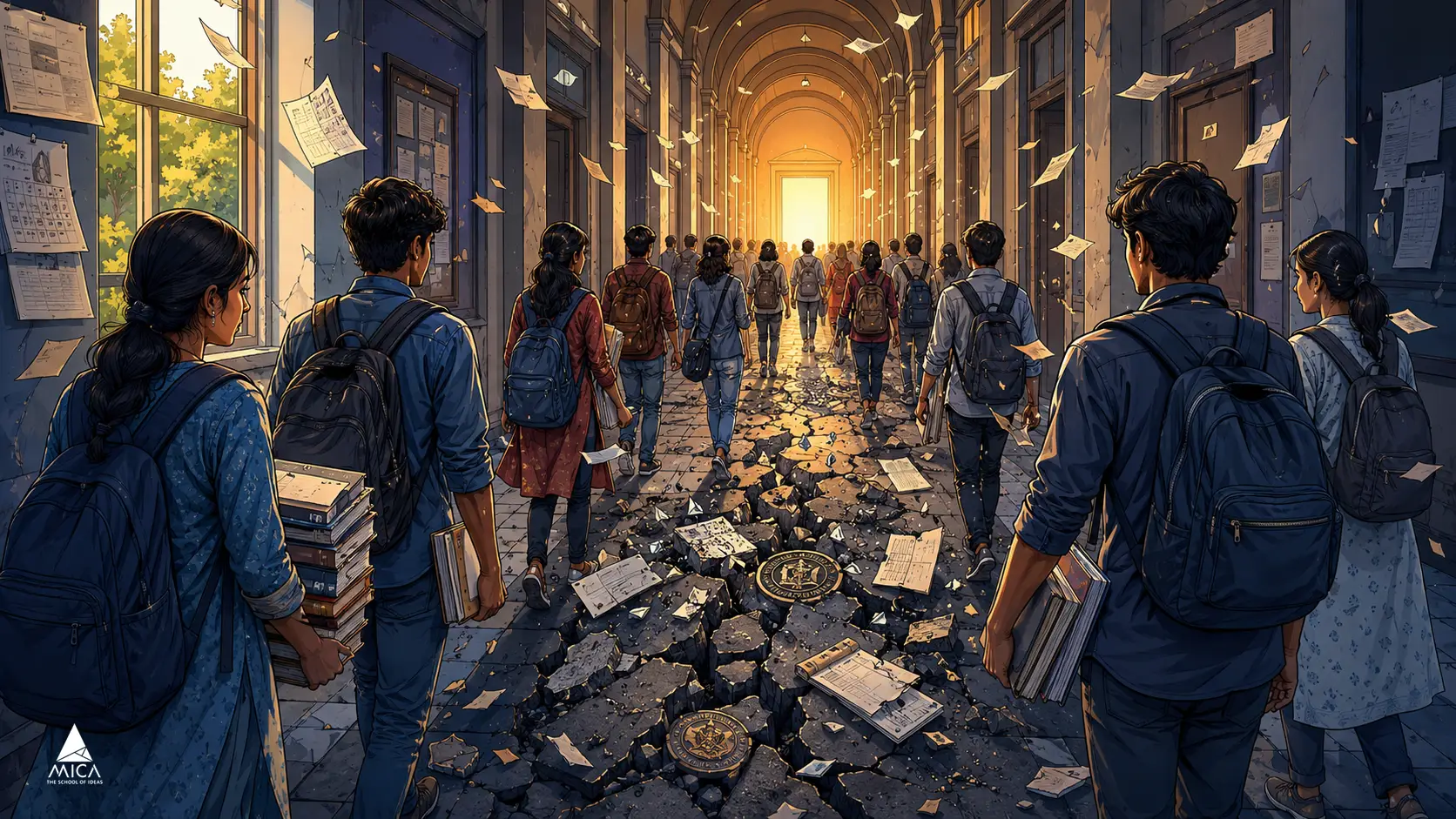
For millions of students in India, competitive examinations are far more than academic milestones, they represent years of sacrifice, hope, and collective family aspiration. Exams like NEET, IIT-JEE, and government recruitment tests often become defining moments not only for students, but for entire households that invest emotionally and financially in their success.
Yet, in recent years, growing incidents of paper leaks, cancellations, and re-examinations have shaken one of the most fundamental pillars of education: trust in the system.
Earlier, the stress of competitive exams came from preparation itself, long study hours, self-doubt, and intense competition. But students still believed in the fairness of the process. Today, that certainty is fading. Increasingly, aspirants are battling not only academic pressure but also systemic unpredictability that no amount of preparation can control.
The emotional cost of such failures is immense. A re-examination does not simply mean appearing for another test. It requires students to rebuild mental focus, families to reinvest resources, and everyone involved to relieve months or even years of anxiety. Cases like the Rajasthan SI examination controversy further reveal how institutional lapses can disrupt lives long after candidates believe they have secured stability.
These incidents are not isolated administrative errors; they point toward a deeper structural concern. While students are continuously expected to show resilience, discipline, and patience, the institutions governing these examinations must also uphold fairness and accountability.
Because when trust in merit begins to erode, aspirations themselves stand at risk.